Skip to content
Schlaf & Angst

About me

Lucille Mayer

M. Sc. Clinical Psychology · Licensed Psychotherapist (Cognitive Behavioural Therapy)

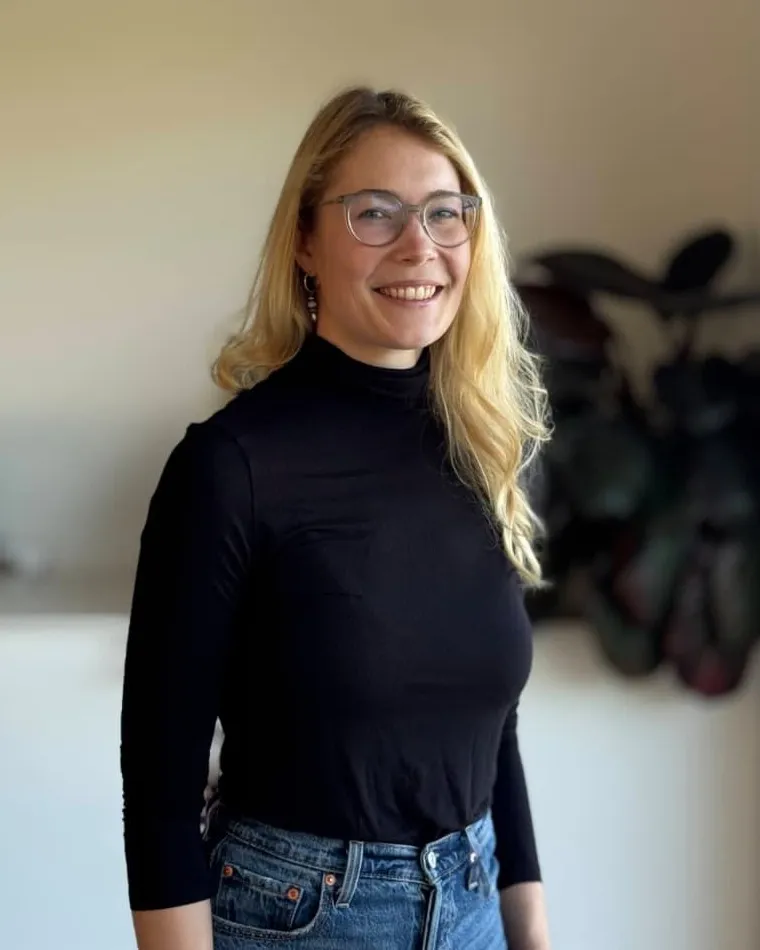
Lucille Mayer, psychotherapist

Biography

I am a psychotherapist specialising in cognitive behavioural therapy, with a particular passion for the subject of sleep. Since 2018 I have accompanied people in various clinical settings — outpatient, day-clinic and inpatient — and have increasingly specialised in treating sleep disorders.

My path began in Vienna, where I completed my psychology degree (B.Sc. and M.Sc.) and spent several years as a research associate at the Institute for Consciousness and Dream Research. There I researched sleep, dreaming, lucid dreaming and chronobiology — a foundation that still shapes my therapeutic work today.

In Munich I then completed my psychotherapy training with a focus on cognitive behavioural therapy at the MUNIP institute — I received my licence (Approbation) in 2026. Alongside this I gained broad clinical experience treating depression, anxiety and panic disorders, obsessive-compulsive disorder, trauma-related disorders, personality disorders, schizophrenia and substance use disorders.

Particularly formative was my work in chronic pain — including at the Algesiologikum day clinic in Munich and the headache centre at LMU Munich. There it became clear again and again how closely sleep, stress and pain are intertwined; this experience gave me a fine sense for complex interactions between body and mind.

I live mostly in Munich. I find balance in yoga and pilates, hiking and audiobooks; now and then I paint or knit. Time with friends matters to me — and I love trying new restaurants.


Qualifications

Training and professional background

The German Approbation is a state licence to practise healthcare. It is what distinguishes psychotherapeutic treatment from coaching and counselling — and it is the precondition for private health insurers and civil-service allowance schemes to reimburse treatment.

2026
Licensed as a psychotherapist (Approbation)Cognitive behavioural therapy, MUNIP institute Munich
since 2025
Self-employed online psychological counsellingGerman and international clients
2024–2025
Psychologist, multimodal pain therapyAlgesiologikum day clinic, Munich
2023–2025
Psychotherapist in trainingMUNIP outpatient clinic, Munich
2023–2024
Psychologist, multimodal pain therapyHeadache Centre, LMU Munich
2022–2023
Psychotherapist in trainingPsychiatry, Klinikum rechts der Isar, TU Munich
2021–2022
Psychotherapist in trainingKirinus day clinic Schwabing, Munich
2018–2021
Research associate and psychologistInstitute for Consciousness and Dream Research, Vienna
2018–2020
M.Sc. Clinical PsychologyUniversity of Vienna
2018
Internship, group and individual therapy, psychodynamicPsychosomatic day clinic, Kliniken im Theodor-Wenzel-Werk, Berlin
2015
Internship, forensic and general psychiatryPsychiatric University Hospital Zurich-Rheinau
2014–2018
B.Sc. PsychologyUniversity of Vienna

Further qualifications

  • Specialist qualification in cognitive behavioural therapy
  • Additional qualification in group therapy (MUNIP)
  • Additional qualification in relaxation and suggestive methods (MUNIP)
  • Member of the Bavarian Chamber of Psychotherapists, membership number ⟨ add number ⟩

Clinical experience

This practice focuses on insomnia and anxiety. In hospitals and outpatient clinics I have also worked with depression, obsessive-compulsive disorder, eating disorders, personality disorders, trauma-related disorders, schizophrenia, substance use disorders, burnout and chronic pain — in day-clinic, inpatient and outpatient settings.

Experience with groups

Alongside individual therapy I have led groups for years: DBT skills training and a burnout group at the Kirinus day clinic, psychoeducation on depression and anxiety plus setting up a mindfulness group at Klinikum rechts der Isar, and psychoeducational groups on pain management, stress management and relaxation at the Algesiologikum. A group format on sleep is in preparation but not yet confirmed.

Research

Sleep was my research field first

From 2018 to 2021 I was a research associate at the Institute for Consciousness and Dream Research in Vienna. My subjects there were sleep disorders, shift work, chronobiology and dreaming. My master's thesis examined the effect of daylight saving time on sleep and mood.

What matters most is what that research was actually about: non-pharmacological treatment of non-restorative sleep — in shift workers, in people struggling with daytime sleepiness. That is precisely the focus of this practice today. Sleep was a research subject for me before it became a treatment focus.

For clinical work this has a very practical consequence: I can judge what the evidence base actually supports and what it does not. On a subject surrounded by so much advice and so many products, that is not a minor detail.

Journal articles

  1. 01

    Holzinger, B., Mayer, L., Levec, K., Munzinger, M.-M., & Klösch, G. (2019). Sleep coaching: non-pharmacological treatment of nonrestorative sleep in Austrian railway shift workers. Archives of Industrial Hygiene and Toxicology, 70(3), 186–193.

    doi:10.2478/aiht-2019-70-3244
  2. 02

    Holzinger, B., Levec, K., Munzinger, M.-M., Mayer, L., & Klösch, G. (2019). Managing daytime sleepiness with the help of Sleep Coaching, a non-pharmacological treatment of non-restorative sleep. Sleep and Breathing, 24, 253–258.

    doi:10.1007/s11325-019-01995-0
  3. 03

    Holzinger, B., & Mayer, L. (2020). Lucid Dreaming Brain Network based on Tholey’s 7 Klartraum criteria. Frontiers in Psychology, 11, 1885.

    doi:10.3389/fpsyg.2020.01885
  4. 04

    Holzinger, B., Mayer, L., Barros, I., Nierwetberg, F., & Klösch, G. (2020). The Dreamland: Validation of a structured dream diary. Frontiers in Psychology, 11, 585702.

    doi:10.3389/fpsyg.2020.585702
  5. 05

    Holzinger, B., Mayer, L., Nierwetberg, F., & Klösch, G. (2021). COVID-19 Lockdown — Are Austrians finally able to compensate their Sleep Debt?. Sleep Medicine: X, 3, 100032.

    doi:10.1016/j.sleepx.2021.100032

Book chapter

  1. 01

    Holzinger, B., & Mayer, L. (2020). Sleep Paralysis. In: Pagel, J. F. (Ed.), Parasomnia Dreaming. New York: Nova Medicine and Health, pp. 73–110.

Working style

How I work

Transparent

You should understand at any point why we are doing what we are doing. I explain the models behind the treatment, set out the plan openly, and discuss changes rather than simply making them.

Resource-oriented

We do not only look at what is not working right now. What you can already do, and what has helped you before, is part of the treatment — not just the problem.

Concrete

Cognitive behavioural therapy is work between sessions. You get tasks that fit your everyday life, and we review together what came of them.

Honest about limits

If I am not the right person — because a different setting, a medical assessment or in-person treatment would suit you better — I say so early and clearly.

Methods

What I work with

Cognitive behavioural therapy is not a rigid programme. Which of these components come into play follows from your case formulation — and we discuss it rather than my simply deciding.

Cognitive behavioural therapy

The basis of my work and the method I am formally qualified in. We look at how thoughts, feelings and behaviour connect — and where that cycle can be changed.

Acceptance and Commitment Therapy (ACT)

Not every uncomfortable feeling can be worked away. ACT helps you tolerate what is difficult without letting it take the wheel, and to act on what genuinely matters to you.

Dialectical Behaviour Therapy (DBT)

Concrete skills for situations where tension or emotions become too strong — useful well beyond the original field of application.

Mindfulness and relaxation

Exercises that help you step out of circling thoughts and let the body wind down. With sleep problems and anxiety this is core equipment, not an extra.

Stress regulation

How do I recognise my early warning signs, and what reliably helps? For many people this is the component that decides whether difficulties return.

Working on self-worth

Living with anxiety or poor sleep for a long time erodes confidence in yourself. We work on that too where it is part of what brings you here — with practical exercises such as chair dialogues.

Let's get to know each other.

Whether we are a good fit is best established in conversation — free of charge and without obligation.

Opens the booking platform It’s Complicated in a new tab.